
Understanding the critical role of muscle in SMA
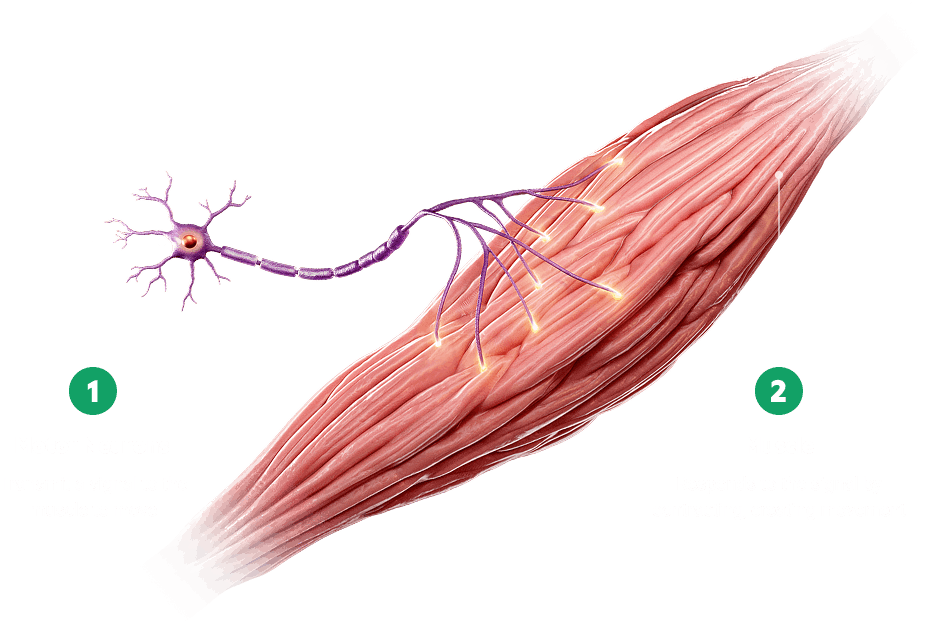
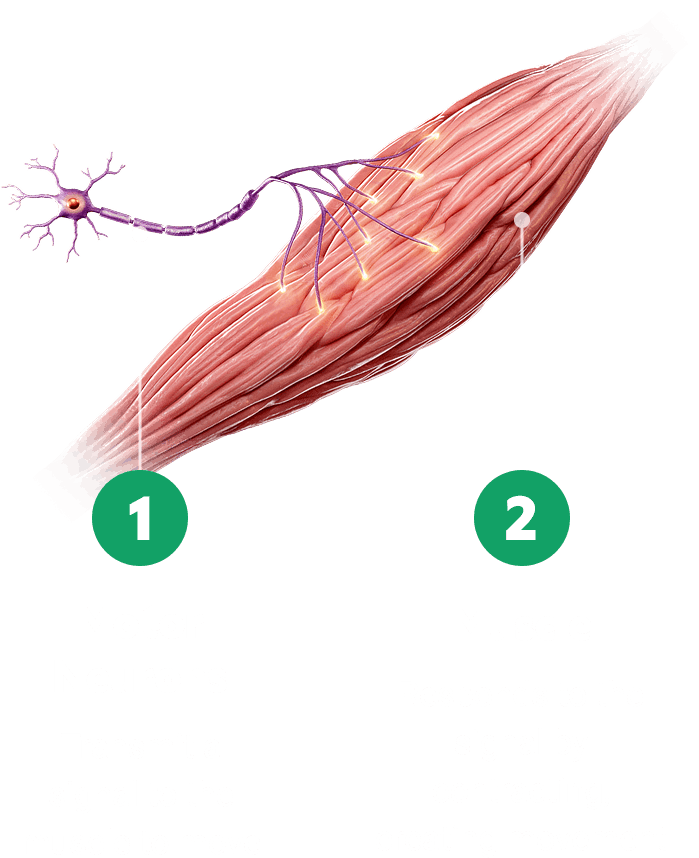
SMA affects two key parts of the motor unit:
motor neurons and the muscle
Movement is a partnership. Motor neurons and muscles work together to power the motor function you need for daily life—from eating and walking to sitting upright and
even breathing.
Despite the advances of SMN2-targeted treatments, motor function decline still occurs over time
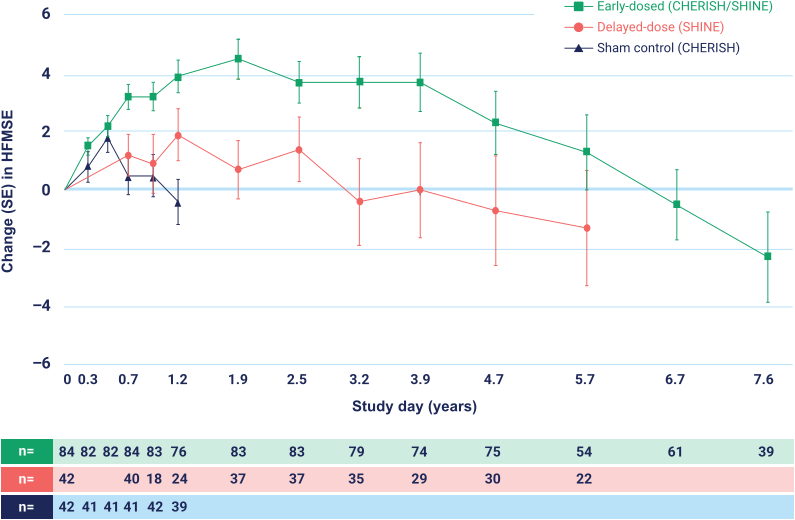
SMN2-targeted treatments directly target the motor neuron, and they’re effective at supporting improvements in motor function.
But studies have shown that despite taking these treatments, children and adults living with SMA may still experience motor function decline due to the progressive nature of the disease.
These graphs contain data from long-term studies that do not include a comparison with an untreated placebo control group. Though these studies are useful, the findings are not as definitive as studies that include a control group.
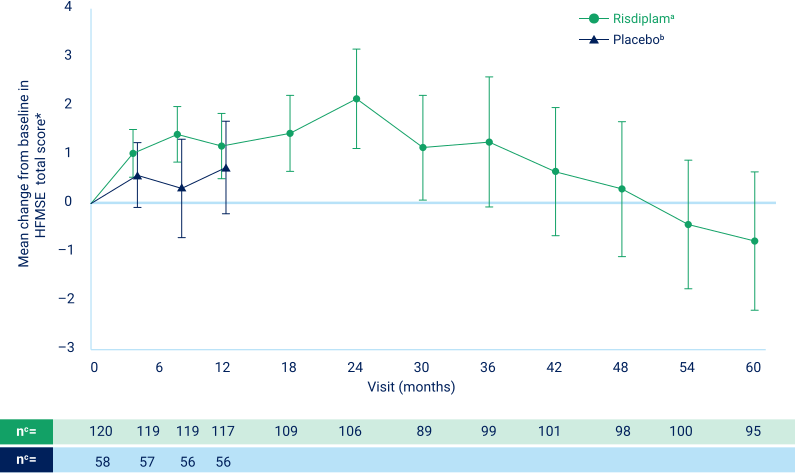
SMN2-targeted treatments directly target the motor neuron, and they’re effective at supporting improvements in motor function.
But studies have shown that despite taking these treatments, children and adults living with SMA may still experience motor function decline due to the progressive nature of the disease.
These graphs contain data from long-term studies that do not include a comparison with an untreated placebo control group. Though these studies are useful, the findings are not as definitive as studies that include a control group.
CHERISH was a phase 3, randomized, double-blind, sham-controlled study to evaluate the efficacy and safety of nusinersen (low-dose regimen, 12 mg) in children with later-onset SMA. SHINE was an open-label extension study for patients with SMA who previously participated in investigational studies of nusinersen, such as CHERISH.
Standard error (SE) bars are used to show the precision of the average result observed in each study group. Smaller error bars indicate more consistent results across people in the study and greater confidence that the average is a reliable estimate, whereas larger error bars indicate greater variation and less certainty.
Data shown for visits with ≥10 participants.
HFMSE=Hammersmith Functional Motor Scale–Expanded; SE=standard error.
SUNFISH was a 2-part clinical trial of risdiplam in a broad and heterogeneous patient population with types 2 and 3 SMA (aged 2-25 years).
aClinical cutoff date: October 2, 2023. bClinical cutoff date: September 6, 2019. Patients in the placebo group received placebo for 12 months followed by risdiplam treatment for 48 months. cNumber of patients with valid results = number of patients with an available total score (result) at respective time points. Intent-to-treat patients. *±95% CI. Baseline is the last measurement prior to the first dose of risdiplam or placebo.
HFMSE=Hammersmith Functional Motor Scale–Expanded.
The science shows it. The SMA community lives it.
“When I think about all the changes in motor function over my lifetime, the one that has affected me the most personally is losing my ability to swallow. Not only did I lose the ability, but it was also a major lifestyle change for me.”
– Alyssa, treated with ISEMBYLD. Paid spokesperson.
“When it comes to motor function, what really affected Lily was keeping up with her peers and living life.”
– Tracy, whose daughter Lily is treated with ISEMBYLD. Paid spokesperson.

Welcome!
You’ll receive ISEMBYLD updates at . Thanks for joining our community, and stay tuned!
Oops!
The form submission failed. If the problem persists, please try again later.
Good news!
You’re already signed up to receive updates at .