

Study design
A detailed look at the clinical study
SAPPHIRE was the phase 3 clinical trial used for the FDA (US Food and Drug Administration) approval of ISEMBYLD. Here’s who participated and what the study measured.


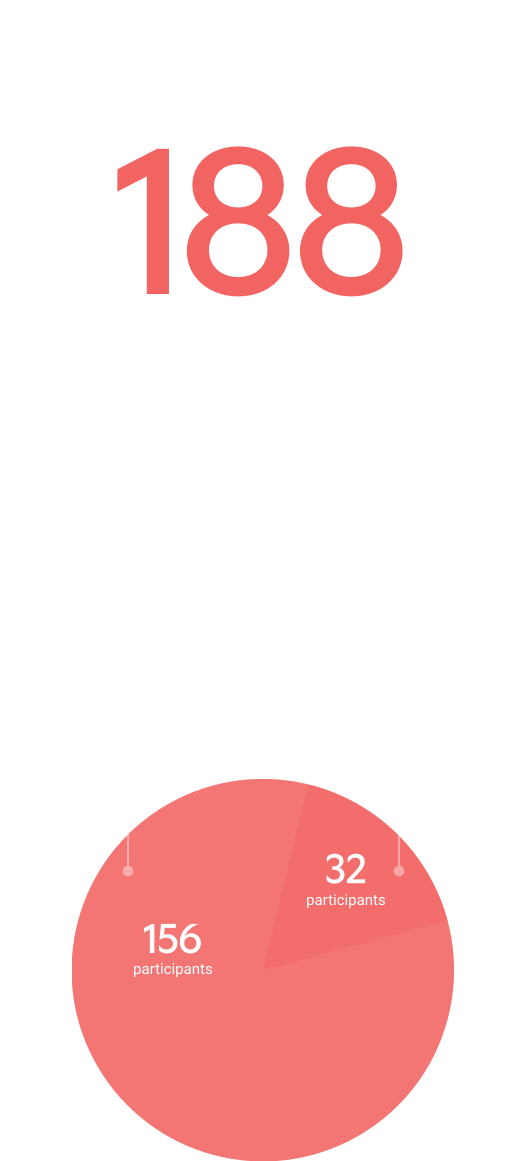

THE PARTICIPANTS’ SMA HISTORY
When did they begin seeing SMA symptoms?
On average, participants aged 2-21 years had an onset of SMA symptoms when they were 1 year old.
What type of SMA did they have?
Participants had type 2 and type 3.
What treatments were they receiving, and for how long?
| # OF PEOPLE | TREATMENT | DURATION |
| 139 of 188 people | Spinraza®* (nusinersen) | 5-6 years average |
| 49 of 188 people | Evrysdi®* (risdiplam) | 3 years average |
What was their level of mobility?
100% of participants were non-ambulatory (unable to walk independently without aids or orthotics over 10 steps).
Average HFMSE Scores at the Start of the Study
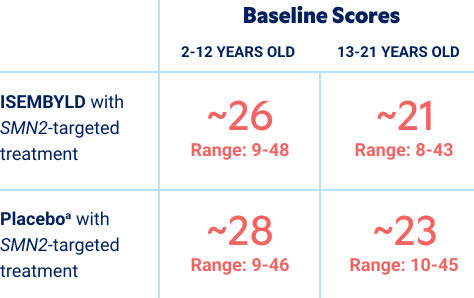
aPlacebo is a substance that has no therapeutic effect.
HFMSE=Hammersmith Functional Motor Scale–Expanded.
THE PROCESS
Over the 52 weeks of the study:
Participants were treated every
4
weeks
Motor function was assessed approximately every
8
weeks
How was the study set up?
Participants continued on their SMN2-targeted treatment while they were treated with ISEMBYLD or a placebo (ie, a substance with no therapeutic effect) every 4 weeks over the course of a year. Motor function was assessed approximately every 8 weeks. At the end of the study, motor function changes were compared between the group receiving ISEMBYLD with their SMN2-targeted treatment and the group receiving SMN2-targeted treatment alone.
How was motor function measured in the study?
The Hammersmith Functional Motor Scale–Expanded (HFMSE) is one of several tests that assesses motor function abilities in your daily life. It was the primary scale used to measure whether ISEMBYLD improved motor function after 52 weeks of treatment. Functional activities tested include lying down, head lifting, rolling, sitting up, and standing.